Why Long-Term Enterprise Partnerships Are Built on Credibility, Not Sales
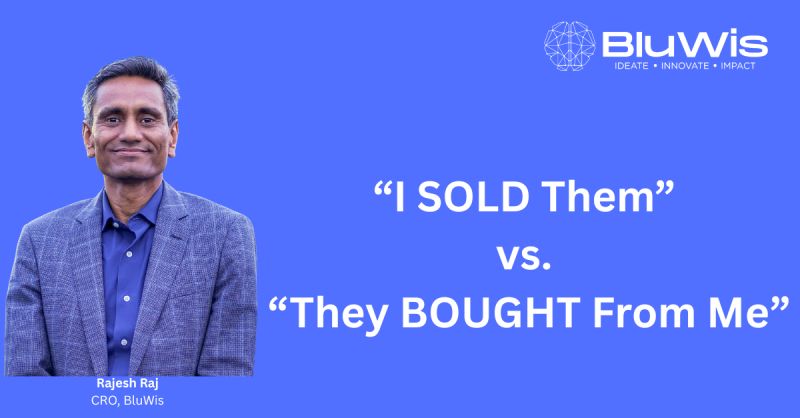
In enterprise transformation, there is a subtle but profound difference between these two statements: “I sold them.” “They bought from me.” At first glance, the distinction may appear semantic. But in reality, it reflects two completely different philosophies of leadership, partnership, and business integrity.
“I sold them” represents a transaction.
“They bought from me” represents trust.
At BluWis, we believe the strongest client relationships are not built on persuasion alone. They are built on credibility, transparency, and the confidence that comes from helping organizations make the right long-term decisions, even when those decisions are difficult.
The Illusion of Selling
In today’s enterprise technology landscape, success is often measured through:
- quarterly targets
- closed deals
- pipeline growth
- revenue milestones
But when organizations focus only on the transaction, a dangerous pattern begins to emerge.
The pressure to:
- overpromise capabilities
- understate implementation risks
- accelerate timelines unrealistically
- ignore operational complexity
becomes increasingly common.
A deal may be won in the short term.
But credibility can quietly erode in the process.
In complex enterprise environments such as SAP S/4HANA transformations and Clean Core modernization programs, credibility is not optional.
It compounds over time.
The Power of Being Chosen
When a client says:
“They bought from me.”
the nature of the relationship fundamentally changes.
The transaction becomes secondary to the trust that enabled it.
Being chosen by a client reflects:
- transparency in communication
- alignment with business realities
- honest evaluation of risks
- long-term strategic thinking
- confidence in execution capability
It means the organization was not simply the loudest voice in the room.
It was the most trusted.
Trust is rarely built during polished presentations or sales pitches.
It is built during difficult conversations:
- when uncomfortable truths are shared
- when risks are identified early
- when expectations are managed honestly
- when leadership chooses integrity over convenience
Those moments define long-term partnerships.
Why Integrity Is a Business Strategy
Integrity is often discussed as a corporate value.
But in reality, integrity is operational.
It is expressed through small, intentional decisions made consistently over time.
In enterprise transformation, integrity means:
- advising against unsustainable approaches
- challenging unrealistic expectations
- identifying architectural risks early
- prioritizing long-term resilience over short-term wins
- walking away from opportunities that are not strategically aligned
These decisions are not always commercially convenient.
In the short term, integrity may cost revenue.
But in the long term, it creates something far more valuable:
- reputation
- trust
- credibility
- long-term client relationships
And those relationships outlast quarterly targets.
Enterprise Transformation Requires Partnership, Not Procurement
As organizations modernize into:
- AI-enabled operations
- SAP S/4HANA ecosystems
- Clean Core architectures
- integrated digital supply chains
enterprise transformation is becoming increasingly strategic.
This means clients are no longer simply buying software implementation services.
They are selecting:
- long-term advisors
- transformation partners
- architectural leaders
- operational collaborators
The future of enterprise consulting will not belong to organizations that simply sell solutions.
It will belong to organizations trusted to guide complex transformation journeys responsibly.
The BluWis Philosophy
At BluWis Technologies, we do not aim to operate as a transactional vendor.
We strive to become a long-term transformation partner.
That means:
- designing for sustainability
- remaining accountable after implementation
- prioritizing architectural integrity
- focusing on business outcomes rather than short-term optics
Trust does not appear on quarterly dashboards.
But it compounds silently:
- through commitments honored
- through difficult truths communicated honestly
- through risks addressed early
- through consistency in execution
Anyone can sell a solution.
But not everyone earns the right to be trusted.
Why Trust Matters More in the AI Era
As AI accelerates enterprise transformation, the importance of trust becomes even greater.
Organizations are increasingly navigating:
- AI-led modernization
- autonomous workflows
- operational automation
- intelligent enterprise systems
In this environment, enterprises do not simply need technology providers.
They need advisors capable of balancing:
- innovation
- governance
- architecture
- operational risk
- long-term business resilience
Because transformation velocity without trust creates instability.
And AI without integrity amplifies poor decisions faster.
Key Takeaways
- Enterprise transformation is built on trust, not transactions
- Long-term credibility matters more than short-term sales wins
- Integrity is a strategic advantage in complex SAP transformations
- Clients increasingly seek transformation partners, not vendors
- Sustainable enterprise growth depends on transparency and accountability
Frequently Asked Questions
Why is trust important in enterprise transformation?
Enterprise transformation involves operational risk, architectural complexity, and long-term strategic decisions. Trust ensures organizations can navigate these changes with transparency and accountability.
What makes a transformation partner different from a vendor?
A vendor focuses primarily on delivering services or products. A transformation partner focuses on long-term business outcomes, strategic alignment, governance, and sustainable execution.
Why is integrity important in SAP S/4HANA transformation?
SAP S/4HANA programs involve significant operational and architectural decisions. Honest communication around risks, timelines, and sustainability is essential for long-term success.
How does BluWis approach enterprise transformation differently?
BluWis focuses on long-term partnership, architectural integrity, Clean Core strategy, and responsible transformation execution rather than transactional delivery models.
Conclusion
At the end of the day, the most meaningful measure of enterprise leadership is not whether a solution was sold.
It is whether trust was earned.
As enterprise transformation becomes more complex, AI-driven, and strategically critical, organizations will increasingly choose partners who prioritize:
- transparency
- integrity
- governance
- architectural resilience
- long-term business value
Because successful transformation is not built through persuasion alone.
It is built through trust that compounds over time.
Ready to Build Transformation Partnerships Based on Trust?
Connect with BluWis to explore enterprise transformation strategies grounded in integrity, architectural discipline, and long-term business resilience.